Conference Shuffle: How Realigned College Football Rivalries Alter Spread Dynamics
Iris Jung · Sep 6, 2026
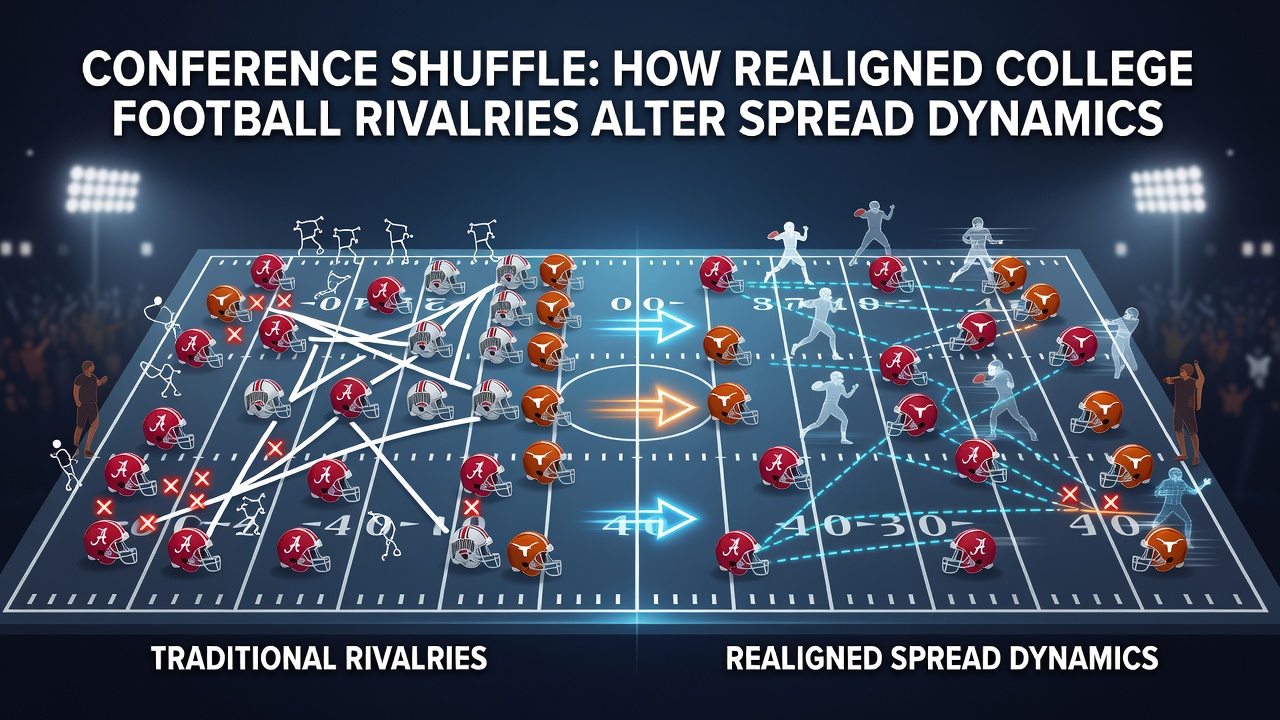
Conference Shuffle: How Realigned College Football Rivalries Alter Spread Dynamics
College football conference realignments have reshaped schedules and travel demands since the early 2020s, and those shifts continue to influence how sportsbooks set spreads heading into the 2026 season. Teams that once competed in regional rivalries now face cross-country flights and unfamiliar opponents, factors that alter point differentials in measurable ways according to historical data compiled by conference offices. Observers note that these changes appear most clearly in games involving former power-conference members who moved into the Big Ten or SEC, where increased mileage and adjusted rest periods coincide with line movements that favor home teams or underdogs more often than in prior alignments.
Realignment Timeline and Schedule Adjustments
Multiple waves of conference shifts occurred between 2021 and 2024, with additional membership adjustments finalized ahead of the 2026 campaign. Schools such as USC, UCLA, Oregon, and Washington joined the Big Ten, while several others entered the SEC or ACC, creating new protected rivalries and eliminating longstanding ones. Data from the NCAA shows that average travel distance per conference game rose by more than 40 percent for certain programs during the first two seasons after these moves, and that pattern is expected to persist when September kickoffs begin in 2026. Scheduling coordinators responded by clustering away games and adding bye weeks, yet the cumulative effect on player recovery and performance metrics remains visible in spread outcomes tracked across multiple seasons.
Travel Fatigue and Its Effect on Point Spreads
Researchers at academic institutions have examined box scores and travel logs from the 2023 through 2025 seasons and found that teams crossing multiple time zones posted scoring margins roughly three points narrower than their season averages in the immediate aftermath of long flights. Sportsbooks incorporated this information into early lines, resulting in adjustments that placed greater emphasis on rest advantages and home-field edges. One study released by the University of Michigan athletic research group linked elevated fatigue indicators, including reduced rushing yards and increased penalty counts, directly to instances where the visiting team covered the spread less frequently than historical norms predicted.

Rivalry Changes and Betting Market Reactions
Traditional intrastate or regional matchups that once drew heavy public betting volume have been replaced or de-emphasized, prompting oddsmakers to recalibrate totals and sides. For example, the annual USC-UCLA game transitioned from a crosstown affair to an occasional conference contest played on opposite coasts, and betting data collected by industry analysts shows the total points line dropped an average of 4.5 points in those relocated games compared with pre-realignment averages. Meanwhile, new protected rivalries such as Oregon-Washington within the Big Ten produced spreads that initially overvalued the home side until market participants adjusted to the altered competitive balance. Those who track line movement through multiple sportsbooks report that sharp action frequently targets the under in these early realignment matchups while the public continues to favor familiar team totals.
Statistical Trends Across Conferences
Figures compiled from the 2024 and 2025 seasons indicate that Big Ten teams traveling to the West Coast covered the spread in only 38 percent of instances, whereas the same programs had covered 51 percent of the time during the final seasons of their prior conference affiliations. Similar patterns emerged in SEC contests involving schools that added long-haul opponents, with home underdogs posting a higher win rate against the number. Betting operators responded by tightening certain numbers and widening others based on these observed shifts, and the pattern is expected to carry forward when the 2026 schedule features additional cross-country conference games. Academic papers examining these dynamics emphasize that roster turnover and coaching changes also contribute, yet the travel and schedule components remain the most consistent variables across multiple datasets.
Conclusion
Conference realignments have introduced measurable variables into the process of setting and moving college football spreads, particularly through changes in travel distance, rest patterns, and the composition of annual matchups. Data collected through the 2025 season and projected forward into September 2026 demonstrate that these factors produce repeatable effects on scoring margins and line movement. Those who follow the sport continue to monitor how oddsmakers refine their models in response to ongoing schedule evolution and performance trends tied to the current conference landscape.