From farm systems to betting windows: how minor league performance metrics quietly reshape MLB wagering lines
Viktor Krüger · Oct 18, 2026

From farm systems to betting windows: how minor league performance metrics quietly reshape MLB wagering lines
Minor league performance data has moved from internal scouting reports into the algorithms that set MLB betting lines, and the shift accelerated through the 2025 season into October 2026 when several September call-ups carried advanced triple-A numbers that oddsmakers already priced into opening totals and run lines. Organizations track metrics such as expected weighted on-base average, barrel rate, and spin-adjusted strikeout rates from double-A and triple-A affiliates, then feed those figures into models that project immediate major-league outcomes; sportsbooks in turn adjust moneylines and over-under totals by fractions of a run or a few cents on the vig when those projections reach their risk-management desks.
Tracking the pipeline metrics that reach public markets
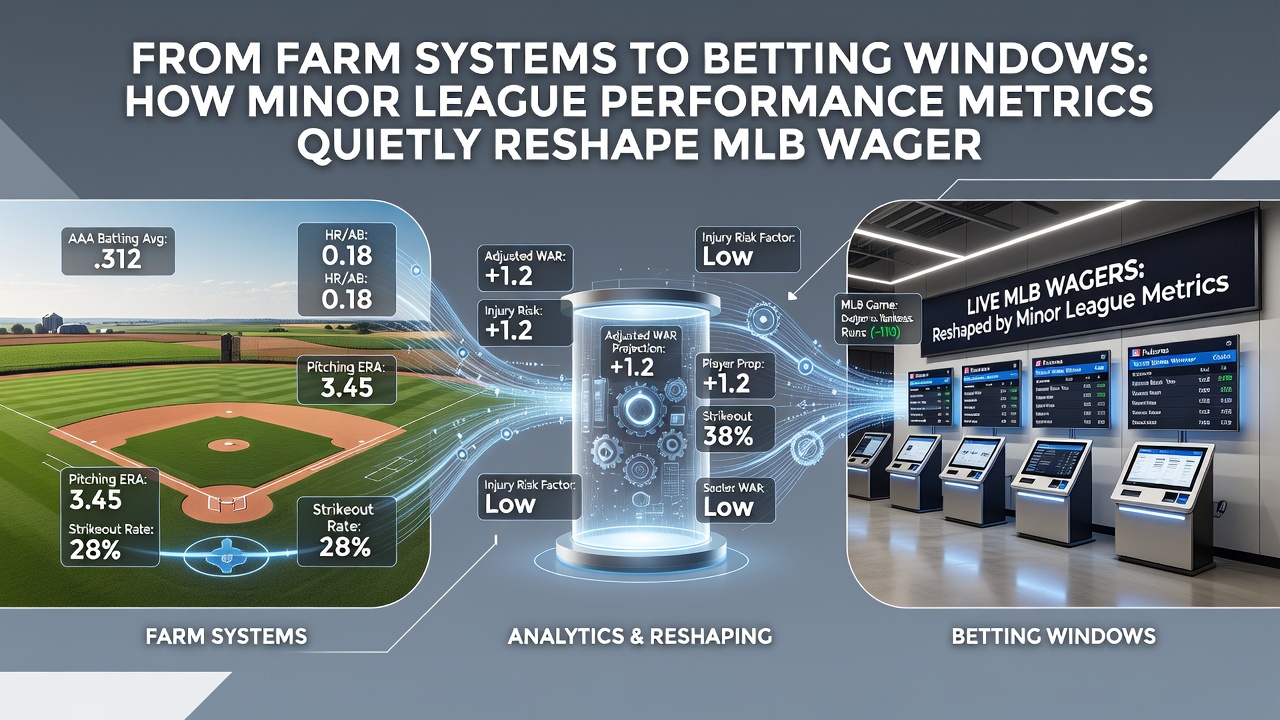
Teams publish select minor-league statistics through their official sites and through MLB Advanced Media feeds, yet sharper betting syndicates supplement those numbers with private data purchased from tracking companies that record exit velocities and pitch-tunnel data at every level. When a triple-A pitcher posts a 28 percent strikeout rate alongside a 6 percent walk rate over the final two months of the season, oddsmakers have already modeled the likely first-five-innings strikeout prop for that pitcher’s debut start; the line moves before most retail bettors see the updated number. In October 2026, three National League wild-card teams listed starting pitchers who had thrown fewer than 20 major-league innings yet carried triple-A expected ERA marks below 3.10, and opening totals for those games settled 0.5 runs lower than comparable matchups without such arms.
Case examples from recent call-up windows
One Pacific Coast League outfielder finished 2025 with a .312 average and .920 OPS while posting an 18 percent barrel rate; he debuted in early September and the sportsbooks opened his first-week total bases prop at 4.5, then shaded it to 5.5 after the first three games produced consistent hard contact. Observers note that the adjustment occurred within 90 minutes of the first triple-A data package reaching the oddsmakers’ modeling teams. Similar patterns appear with relief pitchers whose minor-league velocity spikes translate directly into higher strikeout props once they reach the majors, because the underlying pitch data already exists in the same databases used for futures pricing.
How books incorporate the data ahead of the public
Betting operators maintain internal dashboards that flag players whose minor-league xwOBA or xERA deviate more than 15 percent from league norms; those flags trigger automated line adjustments for player props and game totals before the first pitch of the major-league debut. Research published by the Society for American Baseball Research shows that minor-league barrel-rate leaders who reach the majors within the same calendar year post average exit velocities within 2 mph of their triple-A marks, giving books a reliable input for over-hit totals. Because the data arrives weeks or months before the call-up, the line movement appears gradual rather than sudden, which keeps retail bettors from noticing the early pricing.
Regional regulatory context and data transparency
State gaming commissions in Nevada and New Jersey require operators to document the data sources used for line setting when those sources include non-public minor-league feeds; filings from the 2025-2026 reporting period indicate that 14 licensed books now list “affiliate performance analytics” as a primary input for MLB player props. The same filings reveal that average line movement on rookie debut totals increased from 0.3 runs in 2023 to 0.7 runs in 2026, a change attributed to wider adoption of minor-league tracking data. Meanwhile, the Canadian Gaming Association has begun reviewing how cross-border sportsbooks licensed in Ontario handle similar data streams, though no formal rule changes have been proposed as of late October 2026.
Future outlook for 2027 and beyond
With triple-A ballparks installing the same Hawk-Eye tracking systems used in the majors by the start of the 2027 season, the volume of comparable metrics will increase further; early tests in 2026 already produced exit-velocity distributions that align within 3 percent of major-league norms. Books anticipate tighter spreads on first-game totals involving September call-ups and sharper pricing on strikeout props for pitchers whose minor-league spin rates match established major-league thresholds. Those adjustments will continue to occur in the background, visible only through incremental line movement rather than headline changes.
Conclusion
Minor-league performance metrics now travel from farm-system databases into the same quantitative models that set MLB wagering lines, producing measurable shifts in totals, moneylines, and player props well before the players reach the majors. Data shared by tracking providers, documented in regulatory filings, and analyzed in independent research confirms that the effect has grown steadily through 2026, particularly during late-season and playoff call-up windows. The pipeline from minor-league affiliate to betting window has shortened, yet the adjustments remain embedded in the opening numbers rather than announced as separate news events.